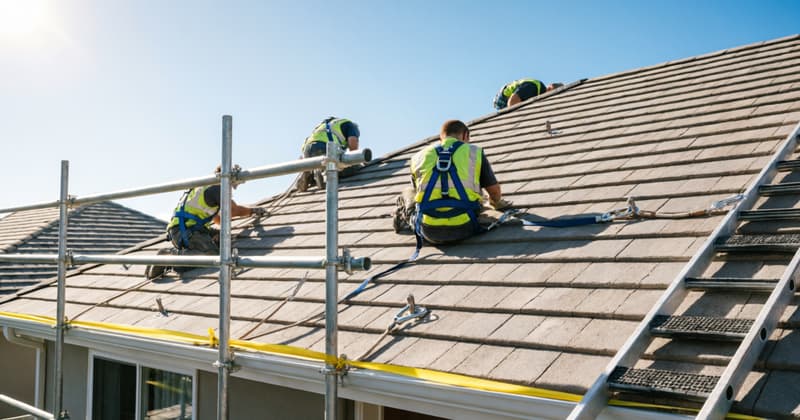

Scaffolding for Roof Work: Access Solutions for Every Pitch
Specialized access considerations for different roof types and roofing projects.
Mana Scaffolding Team
Mana Scaffolding Limited
A roofer working on a 35-degree pitch in a Canterbury nor’wester faces a fundamentally different access challenge than a tradesman replacing a skylight on a flat commercial roof. The scaffold requirements for these two scenarios share basic principles — stable platforms, safe access, edge protection — but the execution diverges dramatically based on roof type, pitch, and the nature of the work being done.
Getting roof access right is not just about safety, though that’s paramount. It’s about productivity. A well-designed roof scaffold lets trades work efficiently, stage materials within arm’s reach, and manage waste without bottlenecks. A poorly designed one slows everything down and creates hazards that erode the safety benefits the scaffold was supposed to provide.
Matching the Scaffold to the Roof
Pitched Roofs: The Residential Standard
Most Canterbury homes feature pitched roofs, and they present a specific set of access challenges. The height varies across the roof span, creating the need for adjustable lifts at different elevations. Slope access requires careful planning — you can’t simply stand on a 25-degree pitch without additional measures. Gutter edge work demands platforms positioned precisely below the fascia line.
The solution typically involves an independent tied scaffold at eaves level with adjustable lifts for varying heights, roof bridges between pitches where the roof configuration changes, and crawl boards on the slope where direct roof access is needed. The critical measurement is that the platform should sit no more than 1.2 metres below the gutter line, with guardrails extending above gutter level for edge protection.
Flat Roofs: The Commercial Context
Flat commercial roofs create different challenges. Parapet access requirements, roof-mounted equipment needing maintenance, drainage systems requiring attention, and edge protection around the full perimeter all need to be addressed. Birdcage scaffolds on the flat surface, edge protection systems around the perimeter, access towers to reach roof level, and equipment platforms positioned where needed form the typical solution set.
Load distribution on the roof membrane is a critical consideration that’s often overlooked. Scaffold bases need to distribute weight without puncturing or stressing the waterproofing layer.
Complex Roofs: Heritage and Specialty
Heritage buildings and architecturally complex structures multiply the challenge. Multiple pitches at different heights, decorative elements requiring protection from scaffold contact, fragile materials that can’t bear any load, and limited attachment points all constrain the design. The solution is usually an independent structure that avoids roof contact entirely, with multiple lift heights for varied elevations, bridging systems across valleys, and protection frames for heritage elements.
Matching the Scaffold to the Project
Roof work isn’t a single activity — it encompasses a range of projects with very different access requirements.
Full Re-Roofing
A complete re-roof demands full perimeter access with material staging areas, a waste removal route, and ideally weather protection options for extended projects. The recommended approach is an independent scaffold at working height, a material lift or hoist for supplies, a chute or skip for old roofing removal, and covered working areas where the project duration justifies it. This is the most scaffold-intensive residential roofing scenario, and getting it right makes the difference between a project that flows and one that stalls.
Localised Repairs
Smaller repair jobs need localized access that’s available on short notice, causes minimal disruption, and remains cost-effective. Mobile scaffold towers for small areas, roof ladder systems with edge protection, and short-term hire arrangements deliver focused access without the cost of a full perimeter scaffold.
Gutter and Fascia Work
Gutter work requires edge access specifically — not full roof access, but a platform at comfortable working height along the gutter line with a limited footprint. A single lift scaffold at gutter height with a narrow footprint where space is tight is usually the most efficient solution.
Skylight and Penetration Work
Skylight installation and roof penetrations need specific point access with the ability to work around existing elements, protection of finished areas, and often coordination between interior and exterior work. Focused scaffold structures with protection for glass elements and modified configurations for unusual access angles are the typical approach.
Planning for Success
The most effective roof scaffolding projects start with good information. For accurate quoting and planning, your scaffolding provider needs to know the roof height at highest and lowest points, the pitch angles if known, whether you need full roof access or specific areas only, the type and duration of work planned, and any site constraints — neighbouring buildings, trees, power lines, or restricted access.
The most common mistake in roof scaffolding isn’t under-scaffolding or over-scaffolding — it’s failing to communicate the full scope of work before the scaffold is designed.
Under-scaffolding creates access that’s too low for comfortable work, provides limited material staging space, leaves materials unprotected, and builds in inadequate safety margins. Over-scaffolding delivers unnecessary height or coverage, adds excessive cost for simple projects, and includes features that aren’t needed. The goal is always the same: right height, right coverage, right features.
From Assessment to Installation
At Mana Scaffolding, our roof access service begins with a thorough assessment of your specific requirements — the roof type and configuration, the work that needs to be done, site constraints, and the project timeline.
From that assessment we design the appropriate scaffold type with correct working heights, necessary access features, and all required safety and protection elements. Our qualified team handles installation, any modifications needed during the project, removal on completion, and full insurance coverage throughout.
Every roof is different. Let us design access that matches your roof, your project, and your timeline.
Get a Roof Access QuoteNeed Expert Scaffolding?
Get a free consultation for your next project.
Mana Scaffolding Team
Mana Scaffolding Limited
Based in Christchurch, Mana Scaffolding brings international expertise from Canada and the UK to deliver safe, compliant scaffolding solutions across Canterbury. Contact us at 0508 626 272.
Related Articles
Residential vs Commercial Scaffolding: Key Differences Explained
Understanding the differences between residential and commercial scaffolding helps you choose the right solution for your project requirements.
Residential vs Commercial Scaffolding: Key Differences
Understanding the critical differences between residential and commercial scaffolding projects helps property owners and project managers plan effectively.
5 Signs Your Construction Site Needs Better Access Solutions
Warning signs that indicate your current access setup is unsafe or inefficient for your construction project.