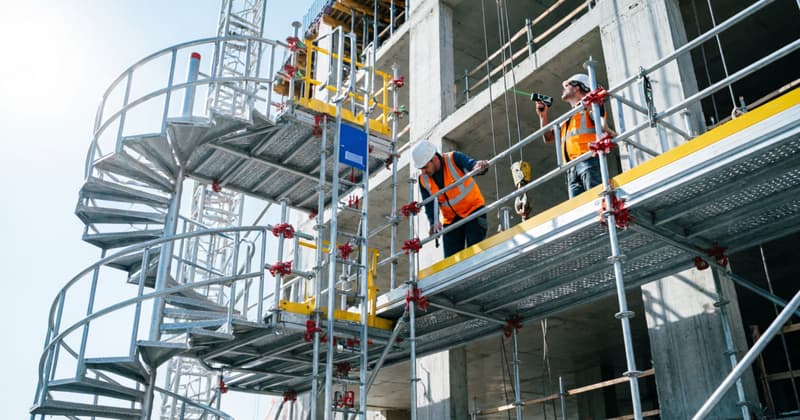

5 Signs Your Construction Site Needs Better Access Solutions
Warning signs that indicate your current access setup is unsafe or inefficient for your construction project.
Terry Pohatu
Mana Scaffolding Limited
Walk any construction site and you’ll see the signs within minutes — if you know what to look for. A ladder propped against a spot it shouldn’t be. Workers taking an unofficial route that saves thirty seconds but bypasses every safety measure. Materials piled awkwardly because there’s no proper staging area. These aren’t minor inconveniences. They are symptoms of an access system that has failed, and they precede incidents more often than anyone on site would like to admit.
1. Workers Are Building Their Own Paths
If you spot ladders propped against unauthorised areas, workers climbing on structural elements, or homemade platforms cobbled together from scrap materials, your access system has already failed. The root cause is almost always the same: official access routes are too inconvenient, so workers improvise.
People on a construction site will always choose the path of least resistance. That’s not carelessness — it’s human nature. The solution isn’t more rules or more signs. It’s making the official access routes the easiest and most obvious choice. Review access paths with the people actually using them. Simplify where possible. Remove the friction that drives workers to create dangerous shortcuts.
When workers start building their own access solutions, you’ve already lost control of safety on your site. This is the clearest possible signal that something needs to change — immediately.
2. Weather Keeps Shutting You Down
Canterbury’s weather is no secret — wind, rain, temperature swings, and the occasional nor’easter that makes everyone on site question their life choices. But weather shouldn’t grind your project to a halt if your access systems are properly designed.
If workers refuse to use access routes in wet conditions, if wind closures are affecting critical work areas, or if slip-and-fall incidents spike every time it rains, the problem isn’t the weather. The problem is access infrastructure that wasn’t designed for the conditions it has to operate in. Weather-protected access systems — with appropriate covers, anti-slip surfaces, and wind-rated structures — are not luxury additions. They are the difference between a project that maintains momentum and one that bleeds time every time the barometer drops.
3. Materials Keep Getting Damaged
Poor access doesn’t just put workers at risk. It forces awkward material handling that leads to waste, rework, and budget overruns. If you’re seeing materials dropped during transport, damage to finished surfaces from clumsy access routes, or an increasing number of rework requests, the likely culprit is an access system that wasn’t designed with material flow in mind.
The fix is integrated material handling routes alongside worker access. Wider platforms for staging, designated chute and hoist points, and protected routes through sensitive areas. This is planning work that pays for itself many times over in avoided rework.
4. Your Schedule Shows “Waiting for Scaffolding Changes”
If your project reports include repeated entries about access modifications delaying work, trades standing around waiting for scaffold access, or rework caused by access limitations, the root problem is static access in a dynamic construction environment.
Construction sites change constantly. Different trades need different access at different phases. A scaffolding system that can’t adapt — that requires full rebuilds every time the work area shifts — becomes a bottleneck rather than an enabler. Modular scaffolding systems that adapt to different construction phases, that can be modified quickly without starting from scratch, and that accommodate multiple trades’ requirements simultaneously are the answer. The upfront investment in flexible systems always costs less than the cumulative delays of a rigid one.
5. Near-Misses Are Adding Up
This is the sign that should stop everything. Slips, trips, and falls on access routes. Workers “catching themselves” on structures. Tools or materials falling from platforms. Strains and sprains from awkward access configurations. Every one of these is a near-miss that precedes a serious injury.
The response should be immediate: a professional review of every access system on site. Platform width and load capacity, guardrail integrity, surface conditions, access route design — every element needs examination. This is not a job for the site foreman to handle between other tasks. It requires access specialists who can identify what’s wrong and specify what’s right.
Time to Bring In Specialists
If you recognise any of these five signs on your site, the time to act is now — not after the next near-miss becomes an incident report. At Mana Scaffolding, we audit existing access systems, identify hazards and inefficiencies, design solutions specific to your project, and provide full documentation of compliance and safety features.
Concerned about access safety on your site? Get a professional site access review from our team.
Book a Site ReviewNeed Expert Scaffolding?
Get a free consultation for your next project.
Terry Pohatu
Mana Scaffolding Limited
Based in Christchurch, Mana Scaffolding brings international expertise from Canada and the UK to deliver safe, compliant scaffolding solutions across Canterbury. Contact us at 0508 626 272.
Related Articles
Working at Height: Beyond Scaffolding
A comprehensive look at all options for safe work at height, not just scaffolding.
Complete Guide to Scaffolding Safety Standards in New Zealand
Everything you need to know about NZ scaffolding safety regulations, AS/NZS 1576 standards, and compliance requirements for construction projects.
Choosing the Right Scaffolding System for Your Project
A guide to different scaffolding systems and when each is appropriate for Canterbury construction projects.