
Choosing the Right Scaffolding System for Your Project
A guide to different scaffolding systems and when each is appropriate for Canterbury construction projects.
Mana Scaffolding Team
Mana Scaffolding Limited
The scaffolding industry doesn’t offer a one-size-fits-all product — it offers a toolkit, and knowing which tool to reach for is what separates a smooth project from an expensive one. The system you choose affects everything: how quickly work can begin, how safely it proceeds, how much it costs, and how flexibly it can adapt when conditions change on site. Getting this decision right at the start matters enormously.
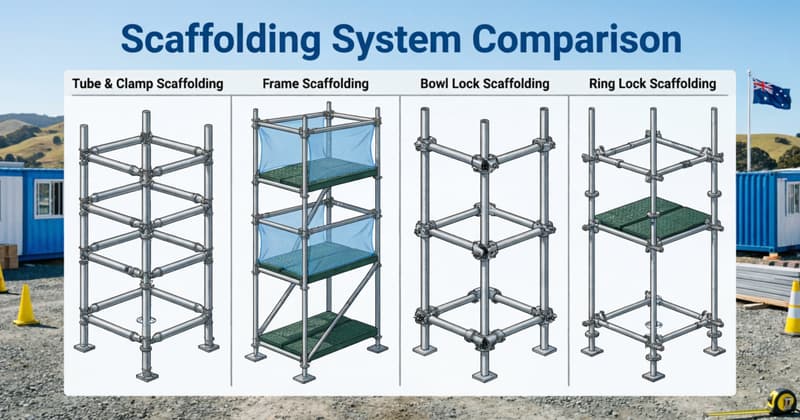
The Four Main Systems
Tube and Fitting: The Traditional Workhorse
Steel tubes connected with couplers and fittings — this is scaffolding in its most elemental form. What tube and fitting lacks in speed, it makes up for in ultimate flexibility. There is no building shape too irregular, no access requirement too unusual, no heritage surface too sensitive for a skilled tube and fitting crew to work around.
This system adapts to any configuration, components are readily available across New Zealand, and it remains cost-effective for small to medium projects. The trade-off is that it requires skilled erectors — the quality of the finished scaffold depends heavily on the experience of the people building it. Installation takes longer than system scaffolding, and managing the variety of components adds logistical complexity.
System Scaffolding: Speed and Consistency
Pre-engineered components with fixed connection points — ringlock, cuplock, Kwikstage, Layher — represent the modern face of scaffolding. System scaffolding is built for speed and consistency. The fixed connection points mean that every joint meets the same quality standard regardless of who is making it, which is a significant advantage on large projects with multiple crews.
System scaffolding excels on large commercial builds, repetitive configurations, high-rise work, and any project where speed is critical. The trade-off is reduced flexibility for unusual building shapes, higher component costs, and more limited availability for small projects.
Mobile Scaffolding: Quick Deployment
Rolling towers with adjustable height are the go-to for interior work, maintenance tasks, and short-term projects. The great advantage of mobile scaffolding is that it relocates without disassembly — you simply wheel it to the next position. Height adjustment is quick, the system is self-contained with built-in safety features, and installation is minimal.
The limitations are real, though. Height is restricted, level floors are essential, and the scaffold is at the mercy of floor conditions. Mobile scaffolding works brilliantly in the right context — it just needs to stay in that context.
Suspended Scaffolding: Working from the Top Down
Platforms suspended from overhead structures — cradles, swing stages, bosun’s chairs — provide access where no other system can. High-rise exterior work, window cleaning, building maintenance, and work above obstacles are the natural territory for suspended systems.
The advantages are compelling: no ground footprint, access to very high areas, adjustable height, and the ability to span obstacles. But suspended scaffolding requires secure overhead anchorage, it is sensitive to wind, it demands specialised training, and load capacity is more limited than ground-based systems.
Matching the System to Your Project
Tube & Fitting
Best for irregular building shapes, heritage structures, and projects needing maximum design flexibility. Slower to erect but adapts to virtually any configuration. Cost-effective for small to medium scope.System Scaffolding
Best for large commercial projects with regular geometry. Faster erection and consistent joint quality. Higher component cost but superior for high-rise and repetitive configurations.The selection process starts with the building itself. Shape is the first filter — regular rectangular buildings suit system scaffolding, while irregular or heritage structures demand the flexibility of tube and fitting. Height narrows the options further: under 4 metres and most systems are viable; 4 to 20 metres points to system or tube and fitting; over 20 metres and system scaffolding is generally recommended. Surface sensitivity — heritage materials versus modern finishes versus glass features — determines whether independent structures or standard attachment methods are appropriate.
Project factors add another layer. Duration matters: days point toward mobile or pre-fabricated systems, weeks allow any approach, and months call for negotiating long-term rates. The type of work — painting versus structural work versus maintenance — dictates whether standard or heavy-duty configurations are needed. And the access pattern — single location, multiple points, or a moving work area — shapes which system will perform best.
Site constraints are the final piece. Ground conditions, available space, and public access levels all influence system selection. Firm level ground opens up every option; soft or uneven terrain requires careful foundation design; no ground access at all pushes toward suspended or cantilever solutions.
Canterbury’s Specific Demands
Scaffolding in Canterbury carries requirements that don’t apply in most of the country. For structures over 5 metres in seismic zones, the standard demands additional diagonal bracing, engineering certification, specific foundation treatment, and movement accommodation. These aren’t optional extras — they are essential adaptations to the region’s seismic reality.
Weather patterns also play a role. The prevailing nor’easter, winter rain frequency, temperature ranges that affect materials, and ground moisture conditions all factor into system selection and scaffold design for Canterbury projects.
Getting the Decision Right
The best way to choose the right scaffolding system is to work with a provider who can assess your specific project requirements, evaluate site constraints and conditions, and recommend the most appropriate approach — not the approach that happens to be in their yard.
At Mana Scaffolding, we assess each project on its merits, consider the full range of site constraints, recommend appropriate systems, provide engineered solutions where needed, and ensure every installation meets Canterbury-specific requirements including seismic design.
Not sure which scaffolding system fits your project? Our team can assess your site and recommend the right approach.
Get Expert AdviceNeed Expert Scaffolding?
Get a free consultation for your next project.
Mana Scaffolding Team
Mana Scaffolding Limited
Based in Christchurch, Mana Scaffolding brings international expertise from Canada and the UK to deliver safe, compliant scaffolding solutions across Canterbury. Contact us at 0508 626 272.
Related Articles
5 Signs Your Construction Site Needs Better Access Solutions
Warning signs that indicate your current access setup is unsafe or inefficient for your construction project.
Residential vs Commercial Scaffolding: Key Differences
Understanding the critical differences between residential and commercial scaffolding projects helps property owners and project managers plan effectively.
Scaffolding Timeline Planning: From Quote to Removal
Understanding the full lifecycle of scaffolding on your project for better planning and budgeting.