
Residential vs Commercial Scaffolding: Key Differences
Understanding the critical differences between residential and commercial scaffolding projects helps property owners and project managers plan effectively.
Mana Scaffolding Team
Mana Scaffolding Limited
A homeowner painting their weatherboard villa and a project manager overseeing a multi-storey office refurbishment both need scaffolding — but beyond that basic commonality, their requirements diverge sharply. The scale is different, the regulations are different, the engineering demands are different, and the cost structures bear almost no resemblance to one another.
Understanding these distinctions matters whether you’re a property owner trying to budget for renovations or a developer planning a major commercial project. Choosing the wrong approach — or the wrong provider — can blow budgets, delay timelines, and create safety exposures that nobody anticipated.
Scale: The Most Obvious Divide
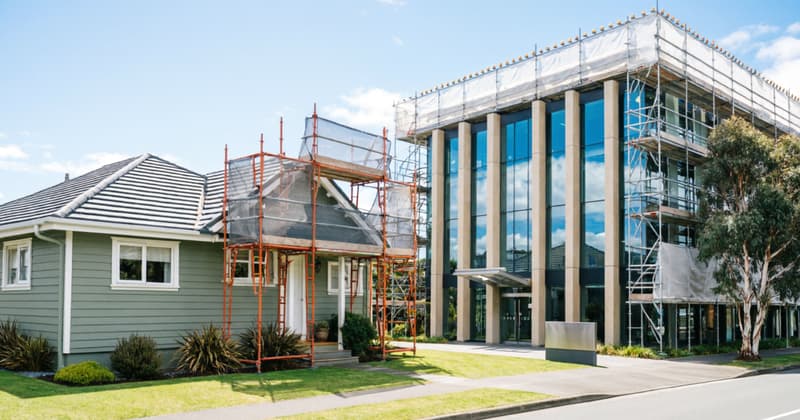
Residential scaffolding typically serves buildings of one to three storeys, reaching heights between four and twelve metres. Projects run for days to weeks, access is usually from private property, and load requirements are light to medium. The scope is contained and manageable.
Commercial scaffolding operates on a different order of magnitude. Buildings of three storeys and up — often much higher — with projects spanning weeks to months. Access frequently involves public spaces, streets, and car parks rather than private driveways. Load requirements are heavy, with multiple trades potentially working from the same structure simultaneously.
Regulation: Two Different Rulebooks
The regulatory environment for residential and commercial scaffolding reflects the difference in risk and public exposure.
For residential work under five metres, requirements include basic safety equipment, competent person oversight, and safe access and egress. The framework is proportionate to the risk.
Commercial scaffolding carries significantly heavier regulatory obligations. Site Safe passports are mandatory for all workers. Detailed safe work method statements must be prepared. Engineer certification is required for structures over four metres. Public liability insurance of at least $1 million is essential. And council permits for footpath or road use are often necessary before any equipment touches the ground.
These aren’t bureaucratic niceties. They’re the safety infrastructure that protects workers, the public, and the businesses involved when projects operate at commercial scale.
Design Philosophy: Simplicity vs Complexity
Residential scaffolding follows a principle of elegant simplicity. Independent tied scaffolds with single lift heights, standard access solutions, and protective sheeting for weather protection handle the vast majority of residential needs. Whether it’s roof repairs, exterior painting, window installation, or masonry work, the design challenge is to provide safe, unobtrusive access that doesn’t dominate the property for longer than necessary.
Commercial scaffolding demands a fundamentally different design approach. System scaffolding from manufacturers like Layher or Kwikstage provides the structural capacity for multi-lift designs. Cantilever and suspended systems reach areas that ground-based scaffolding can’t. Powered access integration coordinates scaffolding with machinery like boom lifts. Debris nets and containment systems protect the public and adjacent properties.
Residential Applications
Roof repairs and replacements, exterior painting and rendering, window installation, masonry work — each project typically requires straightforward, single-purpose access.Commercial Applications
Facade refurbishment, structural repairs, window replacement programmes, signage installation, building maintenance — often running concurrently with multiple trades.Timeline and Logistics
The timeline differences between residential and commercial scaffolding projects are substantial, and they affect everything from budgeting to contractor scheduling.
A typical residential project involves one to two days of scaffold setup, a project duration of one to four weeks, and modifications that are usually straightforward to implement. The logistics are relatively simple — drive a truck to the property, erect the scaffold, and manage access through the site.
Commercial projects require three to ten days of setup depending on complexity, project durations of one to six months, and any modifications that require engineering approval. The logistics layer is correspondingly complex: traffic management plans, council permits, insurance coordination, and integration with other site activities all need to be managed simultaneously.
Choosing the Right Provider
The provider selection criteria differ as much as the projects themselves.
For residential projects, look for experience with similar home projects, a clear pricing structure, references from local homeowners, and appropriate insurance coverage. You want a team that can work efficiently around your property, minimise disruption, and deliver safe access without overcomplicating the job.
For commercial projects, the bar is higher. You need a Site Safe certified workforce, a demonstrated commercial project portfolio, engineering capabilities in-house or through established partnerships, experience with your specific building type, and references from commercial clients who can speak to reliability and compliance under pressure.
One Team, Both Capabilities
At Mana Scaffolding, we handle projects ranging from single-storey homes to multi-storey commercial buildings. Our residential work emphasises fast, tidy installations with minimal disruption to daily life. Our commercial capability delivers engineered systems, full compliance documentation, and project management that integrates with your build programme.
Whether you’re a homeowner planning renovations or a project manager overseeing a commercial development, the principle is the same: the right access solution, designed and installed by people who understand what’s at stake.
Every project is different. Let us assess yours and provide a solution tailored to your actual needs.
Get a Site AssessmentNeed Expert Scaffolding?
Get a free consultation for your next project.
Mana Scaffolding Team
Mana Scaffolding Limited
Based in Christchurch, Mana Scaffolding brings international expertise from Canada and the UK to deliver safe, compliant scaffolding solutions across Canterbury. Contact us at 0508 626 272.
Related Articles
Residential vs Commercial Scaffolding: Key Differences Explained
Understanding the differences between residential and commercial scaffolding helps you choose the right solution for your project requirements.
Scaffolding for Roof Work: Access Solutions for Every Pitch
Specialized access considerations for different roof types and roofing projects.
5 Signs Your Construction Site Needs Better Access Solutions
Warning signs that indicate your current access setup is unsafe or inefficient for your construction project.