
Residential vs Commercial Scaffolding: Key Differences Explained
Understanding the differences between residential and commercial scaffolding helps you choose the right solution for your project requirements.
Terry Pohatu
Mana Scaffolding Limited
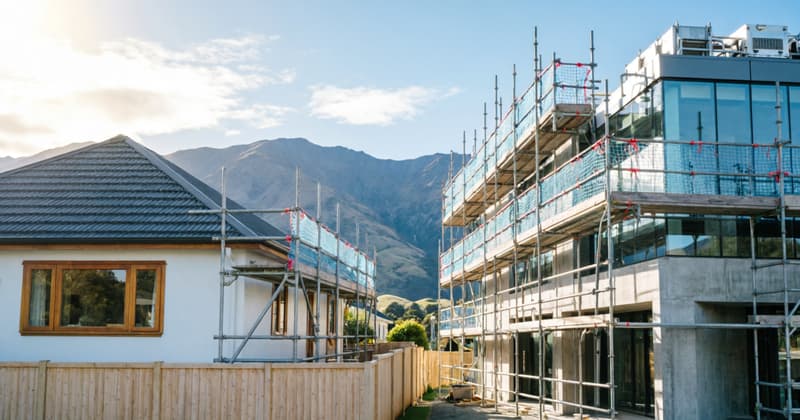
A homeowner painting a two-storey villa in Fendalton and a project manager overseeing a multi-storey office build on Victoria Street might both need scaffolding, but what they actually need are two completely different beasts. The gap between residential and commercial scaffolding is wide — in scale, in complexity, in cost, and in the regulatory hoops each must clear. Understanding where your project sits on that spectrum is the first step to getting the right solution.
Residential Scaffolding: Intimate Scale, Real Complexity
Residential scaffolding typically serves buildings of one to three storeys and operates on shorter timelines — anywhere from a few days to a couple of weeks. The loads are lighter, the footprints are smaller, and the applications tend to be straightforward: exterior painting, roof repairs, chimney work, or heritage restorations on older Canterbury homes.
But don’t let the smaller scale fool you. Residential work carries its own set of headaches. Neighbour impact is often the first one. Scaffolding erected on a residential street needs to account for neighbour access, sightlines, and the general visual intrusion of a steel framework appearing next door. Then there are council noise restrictions that limit working hours, tight spaces that leave little room for equipment staging, and the ever-present need to protect existing landscaping, gardens, and driveways from damage.
These aren’t minor considerations. A residential scaffold that blocks a neighbour’s driveway or crushes a prized garden bed can turn a straightforward project into a community relations nightmare.
The best residential scaffolding companies understand that they’re working in someone’s neighbourhood, not just on someone’s house. That distinction shapes everything from delivery schedules to site cleanup.
Commercial Scaffolding: Scale Changes Everything
Commercial scaffolding operates at a different magnitude entirely. These are the systems that wrap around office buildings, shopping centres, hotels, and institutional structures — often four or more storeys, sometimes many more. The engineering is more complex, the load-bearing requirements are significantly higher, and the project durations stretch from weeks into months.
What really separates commercial work, though, is the public safety dimension. A scaffold on a busy commercial street must incorporate pedestrian protection, traffic management plans, and often gantry systems that allow foot traffic to pass safely underneath. Fire compliance becomes critical — emergency egress routes must be maintained, and fire-resistant materials may be required. And then there is the challenge of business continuity: keeping the building’s tenants operational while the scaffold is up and the work is happening around them.
Crane integration is another factor. Large commercial projects often require coordinated lift planning, which means the scaffolding design must work in concert with the crane schedule, not against it.
The Cost Picture
Pricing between residential and commercial scaffolding reflects the gulf in scope and complexity. A standard single-storey residential scaffold might run between $40 and $80 per linear metre per week. A two-storey setup climbs to $60 to $120. Commercial rates, by contrast, range from $80 to $150 per square metre per month for straightforward office buildings, and up to $300 for complex structures.
Residential
Shorter hire periods measured in days or weeks. Standard system scaffolds suffice for most jobs. Council consent may or may not be required. Insurance coverage is typically standard.Commercial
Extended hires running weeks to months. Custom engineering is common. Building consent is almost always required. Higher liability insurance limits are the norm.Making the Right Call for Your Project
Choosing between residential and commercial scaffolding isn’t really a choice — it’s a matter of correctly identifying what your project demands. The key questions to ask are straightforward: How tall is the building? How complex is the shape? How long will the scaffold be needed? What access do workers require? Are there compliance requirements specific to the site or building type? And what does the budget allow?
The mistake many first-time project managers make is treating scaffolding as a commodity — something you just order up without thinking too deeply about the specifics. In reality, the right scaffolding solution depends on a clear-eyed assessment of all these factors, and often a conversation with an experienced provider who can spot issues you might have missed.
Our Approach at Mana Scaffolding
Every project we take on receives the same commitment to safety and quality, whether it’s a single-storey home renovation or a multi-million-dollar commercial development. For residential clients, that means weekend and after-hours flexibility, careful property protection, and communication that keeps homeowners informed at every stage. For commercial clients, it means detailed project planning, coordination with site managers, and full compliance documentation that keeps auditors happy and projects on track.
We’ve worked across the full spectrum in Canterbury, and that range of experience informs every job we do. The lessons learned on complex commercial builds make our residential work sharper, and the attention to detail required on residential sites keeps our commercial teams grounded.
Not sure what type of scaffolding your project needs? Talk to our team — we'll assess your site and recommend the right approach.
Get a QuoteNeed Expert Scaffolding?
Get a free consultation for your next project.
Terry Pohatu
Mana Scaffolding Limited
Based in Christchurch, Mana Scaffolding brings international expertise from Canada and the UK to deliver safe, compliant scaffolding solutions across Canterbury. Contact us at 0508 626 272.
Related Articles
Residential vs Commercial Scaffolding: Key Differences
Understanding the critical differences between residential and commercial scaffolding projects helps property owners and project managers plan effectively.
Scaffolding for Roof Work: Access Solutions for Every Pitch
Specialized access considerations for different roof types and roofing projects.
Commercial Façade Restoration: A Scaffolding Case Study
How proper scaffolding enabled complete heritage façade restoration in Christchurch CBD.