
Commercial Façade Restoration: A Scaffolding Case Study
How proper scaffolding enabled complete heritage façade restoration in Christchurch CBD.
Keith Timmins
Mana Scaffolding Limited
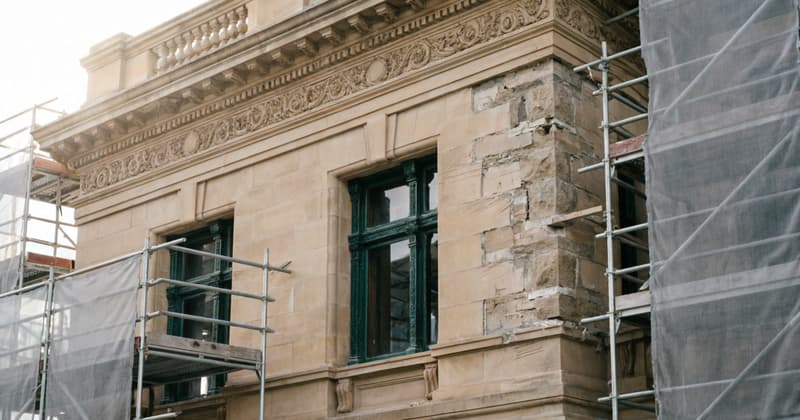
Manchester Street, central Christchurch. A two-storey masonry commercial building dating from 1910, its brickwork crumbling, windows failing, decorative mouldings eroding after more than a century of Canterbury weather and seismic movement. The building needed extensive façade restoration — but the ground-floor retail tenant was open for business, the upstairs offices were occupied, and the street outside carried a constant stream of pedestrians. Shutting everything down wasn’t an option. This is the story of how the right scaffolding design made a complex restoration possible without disrupting a single business day.
The Challenge
The scope of work was substantial. Complete repointing of brickwork across both storeys. Window restoration and replacement. Structural crack repairs throughout the masonry. Decorative moulding restoration — the kind of heritage detail that demands specialist tradespeople working at close range for extended periods. And comprehensive weatherproofing to protect the building for the next hundred years.
The constraints were equally demanding. The ground-floor retail tenant needed to stay open throughout. Upper-floor office workers required continued access. Heritage New Zealand compliance governed every decision about how the building could be treated. Manchester Street’s pedestrian traffic demanded protection. And the available staging area was minimal — this is central Christchurch, where every metre of footpath is contested space.
The Scaffold Design
We implemented a hybrid system built around three core principles: independence, multi-level access, and heritage compliance.
The primary structure was an independent scaffold positioned 2 metres from the building face. This gap served multiple purposes simultaneously. It allowed tenants to enter and exit through their front doors without navigating scaffold components. It created a protected corridor for pedestrian traffic. And it kept the heritage façade clear of direct scaffold contact, eliminating the risk of load damage to fragile masonry and decorative elements.
Three working platforms rose through the structure, each serving a specific phase of the work. Ground level handled pedestrian protection and debris containment. The first platform at 4 metres provided access for window and brickwork on the lower storey. The second at 8 metres served the upper façade. And the top level at 10 metres reached the parapet — the most weather-exposed and structurally sensitive element of the entire building.
Managing Access for Everyone
The scaffold served multiple constituencies simultaneously, and each had different needs.
Tenants received covered pedestrian access maintained throughout the 12-week project. Business signage remained visible from the street — an apparently small detail that matters enormously to a retailer’s bottom line. Noise-intensive work was scheduled for weekends, with advance notice provided to all tenants. The goal was simple: if the scaffolding was doing its job properly, the building’s occupants should barely notice it was there.
Workers accessed the scaffold through a stair tower at the rear of the building, providing independent access that didn’t conflict with tenant movements. A material hoist handled heavy equipment, and designated waste chutes routed debris away from active work areas and public spaces.
Temporary roofing over the entire structure ensured that Canterbury’s weather never stopped work. It also protected restored elements from rain during curing and drying periods, and kept tenant operations completely unaffected by whatever was happening above.
The Timeline
The project unfolded across 12 weeks, each phase building on the one before. The first two weeks were installation — site preparation, ground protection, independent structure erection, safety systems, and the careful documentation and protection of heritage elements before any restoration work began.
Weeks three and four tackled the upper levels: high-level masonry work, window removal and restoration, structural repairs, and the removal of decorative elements for off-site restoration by specialist craftspeople.
The long middle stretch — weeks five through eight — covered the main façade work. Brick repointing across both storeys. Window installation. Moulding and detail restoration. Weatherproofing application.
Weeks nine and ten brought the finishing work — final restoration elements, painting and sealing, quality inspections, and touch-up work. The last two weeks were demobilisation: progressive scaffold removal, heritage element inspection, final documentation, and site reinstatement.
Results That Speak
The numbers tell the story. Zero incidents across 12 weeks of work on an active heritage building. Zero tenant disruptions — both businesses operated normally throughout. Zero weather delays, thanks to the temporary roofing system. Full Heritage New Zealand compliance achieved. And the budget was met with no variations required.
“The scaffolding design made this complex project straightforward. Having the tenants operate normally throughout was essential to our business case. Mana Scaffolding’s planning and execution exceeded expectations.” — Building Owner
The restored façade received full Heritage New Zealand compliance certification, with particular commendation for the protection measures implemented during the restoration period.
What This Project Proves
Four lessons from Manchester Street apply broadly to heritage and commercial restoration work across Canterbury.
Independent structures work. Scaffolding that doesn’t touch the heritage fabric protects both the building and the people working on it. The 2-metre gap between scaffold and façade was the single most important design decision on the entire project.
Multi-use design maximises efficiency. Platforms that served simultaneously as access, protection, and workspace eliminated the need for separate systems and kept the scaffold footprint to a minimum.
Commercial continuity is achievable. With proper planning, businesses can operate normally during restoration — and that capability is essential for building owners who need to justify the economics of heritage preservation.
Weather protection pays for itself. The investment in temporary roofing eliminated weather delays entirely and paid back through schedule reliability and tenant satisfaction.
Planning a Similar Project?
If you’re approaching heritage or commercial façade restoration anywhere in Canterbury, the Manchester Street approach — independent scaffolding, heritage-compliant design, multi-use platforms, and comprehensive weather protection — may be the right framework for your project.
Every heritage building is unique, and so is every scaffolding solution. Talk to our team about a site-specific assessment.
Get a Site AssessmentNeed Expert Scaffolding?
Get a free consultation for your next project.
Keith Timmins
Mana Scaffolding Limited
Based in Christchurch, Mana Scaffolding brings international expertise from Canada and the UK to deliver safe, compliant scaffolding solutions across Canterbury. Contact us at 0508 626 272.
Related Articles
Residential vs Commercial Scaffolding: Key Differences Explained
Understanding the differences between residential and commercial scaffolding helps you choose the right solution for your project requirements.
Seismic Scaffolding: Designing for Christchurch Conditions
Scaffolding in earthquake-prone Christchurch requires specialized design considerations. Learn how we ensure stability and safety during seismic events.
Residential vs Commercial Scaffolding: Key Differences
Understanding the critical differences between residential and commercial scaffolding projects helps property owners and project managers plan effectively.