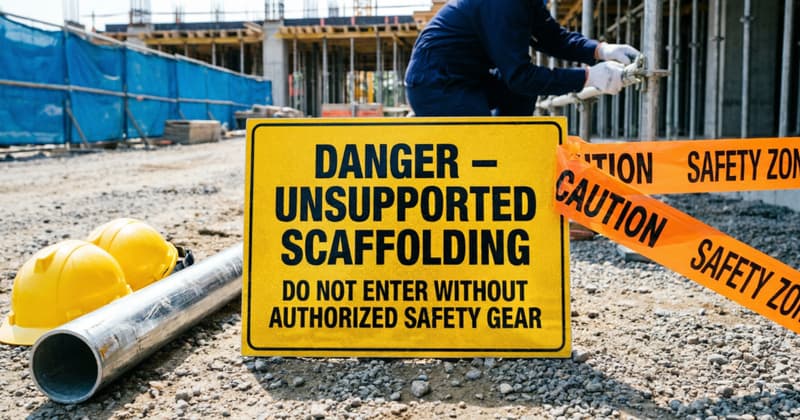

Safety First: A Homeowner's Guide to DIY Scaffolding
Important safety considerations before attempting any scaffolding work yourself.
Mana Scaffolding Team
Mana Scaffolding Limited
The price tag on professional scaffolding gives plenty of Canterbury homeowners pause. It looks straightforward enough — some metal tubes, a few platforms, a couple of afternoons with a ladder and a determined attitude. But ACC data tells a different story: falls from height remain one of the most common causes of serious injury for home DIYers across New Zealand, and inadequate scaffolding is a recurring factor.
Before you commit to erecting your own scaffold, it’s worth understanding exactly what the law permits, where the real risks lie, and what the actual cost comparison looks like when you factor in everything that matters.
What the Law Allows — and Where It Draws the Line
New Zealand regulations do give homeowners some latitude. You can erect scaffolding on your own property for minor repairs and maintenance, single-storey work, and short-term installations under five metres in height. That’s the legal boundary for DIY.
Beyond that, the rules are clear. Any structure over five metres, work on rental properties, commercial projects, complex installations, and any scaffolding in public access areas all require certified scaffolders. There’s no grey area here — these requirements exist because the risks escalate dramatically beyond the DIY threshold.
The Uncomfortable Truth About DIY Scaffolding Accidents
ACC’s injury data paints a clear picture of what goes wrong when untrained people erect their own scaffolding. The patterns are consistent: inadequate bracing that allows the structure to sway under load, poor foundation setup that leads to uneven settling, missing guardrails that remove the last line of defense, and incorrect component assembly that compromises the entire structure.
These aren’t theoretical risks. They’re the specific failure modes that show up in accident reports year after year. The five most common DIY scaffolding failures follow a predictable sequence: uneven settling that causes one side to sink, lateral collapse from insufficient bracing, component failure from mixing incompatible fitting types, platform failure from overloading or poor installation, and access accidents from unsafe ladders or climbing on the frame itself.
Equipment Quality: The Hidden Variable
One of the biggest decisions in any DIY scaffolding project is where the equipment comes from. Hiring professional-grade equipment from a reputable supplier gives you properly maintained components with known load ratings, correct specifications for your project, insurance coverage included in the hire, delivery and pickup service, and access to technical support if something doesn’t look right.
Buying cheap imports is a fundamentally different proposition. Unknown load ratings, possible manufacturing defects, no insurance coverage, no support when issues arise, and components that may not meet New Zealand standards — these are the trade-offs that come with saving a few hundred dollars on equipment.
If DIY is legal for your project, the single best investment you can make is hiring quality equipment from a reputable supplier. The scaffold you’re standing on is not the place to cut corners.
When to Put the Tools Down and Call a Professional
Some situations make DIY scaffolding a clear mistake, regardless of your confidence or experience level.
Structural factors that demand professional input include heights over four metres, uneven or sloping ground, soft ground conditions, any building structural concerns, and the need for cantilever or suspended platforms. Even experienced DIYers should recognise these as beyond their competence.
Complexity factors matter too. Multiple access points, configuration changes during the project, integration with other work, protection of property, and public access near the site all add layers of complexity that require professional judgment.
And then there are personal factors that are easy to overlook. No previous scaffolding experience, working alone, health concerns, and limited time available all increase risk. Honest self-assessment at this stage can prevent regret later.
The Real Cost Comparison
This is where most homeowners are surprised. When you add up the true cost of DIY scaffolding and compare it honestly with professional installation, the gap is often much smaller than expected.
A typical two-week DIY project involves equipment hire at $400–$600, delivery and pickup at $50–$100, consumables like ties and fittings at $50–$100, personal protective equipment at $100–$200, and your own time — which has a real opportunity cost. Against that, professional scaffolding supply and erection for a comparable project runs $600–$1,200, with insurance included, compliance guaranteed, and modifications usually available.
Our Honest Assessment
We’re straightforward about when DIY makes sense and when it doesn’t. For straightforward, legal, single-storey projects, we can hire you quality equipment, provide safety instructions, and offer phone support during your project. We’d rather help you do it safely than see someone get hurt cutting corners.
For anything beyond basic single-storey work, we strongly recommend professional installation. The value we provide — engineering knowledge for complex structures, insurance coverage protecting your property, compliance documentation, efficient same-day installation, and modifications during your project — isn’t just about convenience. It’s about making sure you’re around to enjoy the finished job.
Not sure which approach fits your project? We'll give you honest advice — no obligation, no pressure.
Call 0508 626 272Need Expert Scaffolding?
Get a free consultation for your next project.
Mana Scaffolding Team
Mana Scaffolding Limited
Based in Christchurch, Mana Scaffolding brings international expertise from Canada and the UK to deliver safe, compliant scaffolding solutions across Canterbury. Contact us at 0508 626 272.
Related Articles
Complete Guide to Scaffolding Safety Standards in New Zealand
Everything you need to know about NZ scaffolding safety regulations, AS/NZS 1576 standards, and compliance requirements for construction projects.
5 Signs Your Construction Site Needs Better Access Solutions
Warning signs that indicate your current access setup is unsafe or inefficient for your construction project.
Construction Site Safety: The Scaffolding Perspective
How proper scaffolding contributes to overall site safety and WorkSafe compliance.