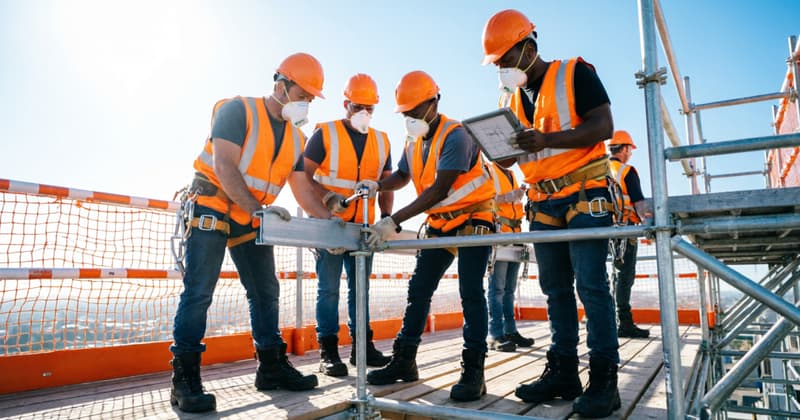

Construction Site Safety: The Scaffolding Perspective
How proper scaffolding contributes to overall site safety and WorkSafe compliance.
Mana Scaffolding Team
Mana Scaffolding Limited
Every year, falls from height account for a disproportionate share of serious workplace injuries across New Zealand construction sites. Yet many of these incidents are entirely preventable — and the single most effective intervention isn’t a harness or a safety seminar. It’s the scaffolding standing on site.
When designed and installed correctly, scaffolding doesn’t just provide access to hard-to-reach areas. It fundamentally reshapes the risk profile of an entire project, moving safety solutions up the hierarchy of controls from last-resort measures to engineered prevention. Understanding how scaffolding fits into the broader safety picture is essential for every site manager, principal contractor, and property developer working in Canterbury.
Where Scaffolding Sits in the Safety Hierarchy
The hierarchy of controls is the backbone of workplace safety thinking in New Zealand, and scaffolding occupies a critical position within it. At the top of the hierarchy sits elimination — removing the hazard entirely by designing work so nobody needs to work at height. That’s the ideal, but on most construction sites it’s simply not realistic. Roofs need repairing, facades need painting, and structures need building.
That’s where scaffolding delivers real value. It operates as an engineering control, the second-most effective tier in the hierarchy. By providing stable platforms with guardrails, safe access routes, and enclosed working areas, properly designed scaffolding eliminates the risk of falling without eliminating the need to work at height. It’s a profound distinction.
The difference between fall prevention and fall arrest isn’t semantic — it’s the difference between a system that stops accidents and one that mitigates their consequences.
Fall prevention through guardrails, complete working platforms, and designated access routes should always be the primary goal. Fall arrest systems — harnesses, anchor points, and rescue procedures — are a fallback for situations where platforms genuinely cannot be provided. At Mana Scaffolding, we design for prevention first and reserve arrest systems as a last resort.
The Four Hazards Every Site Manager Should Track
Scaffolding-related incidents on New Zealand sites tend to fall into four distinct categories. Understanding the causes behind each one is the first step toward eliminating them.
Falls from Height
The most obvious risk, and the most preventable. Falls typically result from missing or inadequate guardrails, incomplete decking, workers climbing on scaffold frames instead of using designated access points, or overreaching from platforms. The solution is straightforward: complete guardrail systems, full platform coverage, and strict policies around access points.
Falling Objects
Tools left on edges, materials not properly secured, inadequate toe boards, and poor debris management all contribute to the risk of objects falling onto workers or the public below. Toe boards, tool lanyards, designated material storage areas, and debris containment systems are non-negotiable on any well-run site.
Structural Collapse
This is the category that keeps safety professionals awake at night. Collapse can result from inadequate foundations, missing bracing, overloading, or unauthorized modifications by trades who don’t understand the engineering implications of their actions. Proper ground assessment, complete bracing installation, and strict modification protocols are essential safeguards.
Access Injuries
Less dramatic than a collapse but far more common, access injuries occur when workers use unsafe ladders, climb scaffold frames, or navigate poorly designed access routes. Stair towers for high-traffic areas and clear, designated access points dramatically reduce this risk.
Integrating Scaffolding into Your Site Safety Plan
Scaffolding shouldn’t be an afterthought that arrives on site the day before work starts. It needs to be woven into the project’s safety planning from the earliest stages.
During the planning phase, identifying all height work, mapping access routes, coordinating with other site activities, and budgeting adequately for safety features all depend on early scaffold input. The documentation requirements — site-specific scaffold plans, safe work method statements, inspection schedules, and emergency procedures — should be prepared before the first tube is unloaded.
Once construction is underway, the focus shifts to daily vigilance. Scaffold condition, access route integrity, tag status verification, and surface conditions all need checking. Regular safety briefings, modification notifications, incident reporting, and weather updates keep the communication loops tight.
The coordination challenge extends across other trades too. Shared access planning, schedule coordination, a clear modification approval process, and safety briefings for new workers all need to be managed. Site management bears responsibility for inspection compliance, documentation maintenance, incident response, and continuous improvement.
WorkSafe Compliance: What Inspectors Actually Look For
When WorkSafe inspectors visit your site, they’re looking for specific, tangible evidence that your scaffolding meets the required standards. The Health and Safety in Employment Regulations 1995 and AS/NZS 1576/4576 set the framework, but what matters on the day is documentation and physical compliance.
Inspectors will typically check the scaffold register for currency, review inspection documentation, verify tag system implementation, confirm competency evidence for workers, examine safe work method statements, and assess worker awareness and training. Missing any one of these can result in improvement notices, prohibition notices, or prosecution.
Building a Culture Where Safety Sticks
Regulations and inspection regimes only go so far. The sites with the best safety records are the ones where safety culture runs deep — from site management allocating adequate budgets and leading by example, through to workers who understand that reporting a defect isn’t an inconvenience but a professional responsibility.
Training plays a central role. Workers need to know that they must use designated access only, report defects immediately, never modify scaffolding without authorization, and follow safe work procedures consistently. But training alone isn’t enough. There needs to be a shared understanding that safety expectations are clear, reporting is encouraged, improvements are welcomed, and everyone is accountable.
Our Commitment to Going Beyond Minimum Standards
At Mana Scaffolding, we don’t see compliance as a ceiling — we see it as a floor. Our standards exceed minimum requirements across the board: engineering input on complex structures, enhanced inspection protocols, comprehensive documentation, and proactive hazard identification.
When you engage our team, you receive full insurance coverage, a Site Safe qualified workforce, detailed documentation for your records, and ongoing support throughout your project. We bring international experience from Canadian industrial environments and UK refinery standards to every Canterbury site we work on.
Your site's safety is only as strong as its access systems. Let's make sure yours are built right.
Get a Safety AssessmentNeed Expert Scaffolding?
Get a free consultation for your next project.
Mana Scaffolding Team
Mana Scaffolding Limited
Based in Christchurch, Mana Scaffolding brings international expertise from Canada and the UK to deliver safe, compliant scaffolding solutions across Canterbury. Contact us at 0508 626 272.
Related Articles
Complete Guide to Scaffolding Safety Standards in New Zealand
Everything you need to know about NZ scaffolding safety regulations, AS/NZS 1576 standards, and compliance requirements for construction projects.
5 Signs Your Construction Site Needs Better Access Solutions
Warning signs that indicate your current access setup is unsafe or inefficient for your construction project.
Safety First: A Homeowner's Guide to DIY Scaffolding
Important safety considerations before attempting any scaffolding work yourself.