
Winter Scaffolding: Preparing Your Site for Cold Weather
Essential considerations for scaffolding during Canterbury's winter months.
Mana Scaffolding Team
Mana Scaffolding Limited
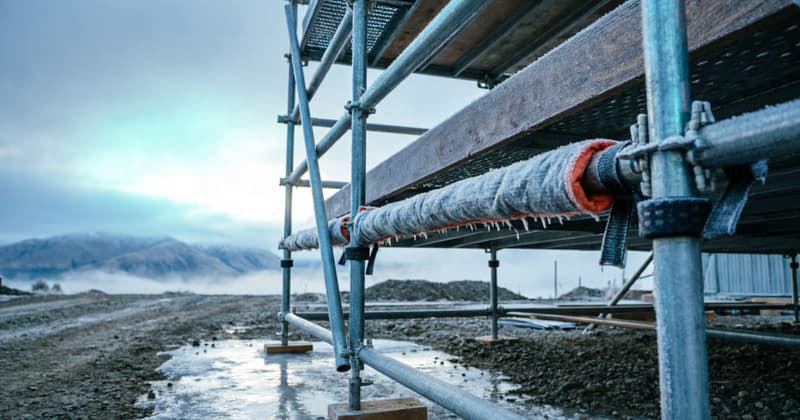
The first frost of the season arrives quietly in Canterbury. By dawn, every scaffold platform in the region is coated in a thin layer of ice that turns a routine walk across a board into a calculated risk. By mid-morning, the frost may have cleared — or a cold front may have moved in, bringing rain that saturates every surface and wind that makes the scaffold sway.
Winter does not stop construction in Canterbury. Deadlines still need to be met, buildings still need repairs, and projects still need scaffolding. But winter changes the rules. The scaffolding that performed flawlessly in autumn can become a hazard in June if it is not prepared for what the cold months bring.
What Canterbury Winter Does to Scaffolding
Canterbury winters are defined by morning frosts that create slip hazards on every platform surface, shortened daylight that compresses working hours and complicates early morning starts, wind chill that affects worker safety and comfort at height, and temperature cycling that affects how materials behave.
Weather events become more frequent between May and August. Cold fronts bring sustained wind. Rain events increase in frequency. Ground moisture rises, affecting the foundations that support the scaffold’s entire load. At higher elevations, snow becomes a factor — and even in the city, the occasional frost heave can shift base plates on exposed sites.
These are not exceptional conditions. They are the baseline. Planning for winter scaffolding means planning for these conditions as the normal operating environment, not as disruptions to a fair-weather plan.
Preparing the Ground Before Winter Sets In
The foundation of any scaffold becomes more critical in winter. Drainage patterns must be identified before installation so that water does not pool around base plates. Saturated ground requires enhanced base plate configurations, and frost heave in exposed areas can shift foundations overnight if not accounted for in the design.
Wind assessment takes on greater urgency. Prevailing wind directions, gust acceleration zones around buildings, and exposure to frontal weather systems all inform the additional bracing needed for winter-rated installations. A scaffold designed for summer conditions may not have the lateral stability to withstand a Canterbury winter storm.
Access routes also change character in winter. Paths that were straightforward in dry conditions become muddy and hazardous. Temporary access protection — boards, matting, or defined pathways — keeps the site functional and safe when the ground deteriorates.
Winter-Specific Scaffold Modifications
Anti-Slip Surface Systems
The single most impactful winter modification is treating platform surfaces to prevent slips. Grip-enhancing coatings, anti-slip mesh on walkways, additional cleats on boarding, and regular de-icing protocols transform a frost-covered platform into a usable work surface. These are not optional add-ons for winter work — they are fundamental safety measures.
Drainage Management
Water management on scaffolding requires deliberate design. Gaps planned for water runoff, platforms angled for drainage, collection points that direct water away from work areas, and protection systems for stored materials all keep the scaffold functional through wet periods.
Wind and Cold Barriers
Debris netting doubles as wind protection, reducing the wind chill that affects workers at height. Temporary sheeting options and work area enclosure systems create zones where trades can work in reasonable comfort. For longer winter projects, heated break areas provide essential recovery time for workers exposed to sustained cold.
Lighting Systems
With daylight shrinking to roughly nine hours in mid-winter, platform-level lighting becomes essential for early starts. Access route illumination, emergency lighting for power events, and motion-activated safety lights keep the scaffold usable through the darker months.
The Daily Winter Protocol
Winter scaffolding demands a daily discipline that summer does not.
Every morning begins with a surface condition assessment. Frost and ice must be removed before work begins. Moisture levels need monitoring. Structural movement from overnight temperature changes requires checking.
Throughout the workday, conditions are monitored continuously. Weather watches, surface conditions, worker welfare, and material protection all demand active attention. The scaffold that was safe at nine o’clock may not be safe at noon if a front moves through.
How Cold Affects Scaffold Materials
Steel components become more brittle in extreme cold. Connections loosen with temperature cycling as metal expands and contracts. Ice accumulates on surfaces, adding weight and reducing grip. Moisture in threads can freeze, making adjustments difficult.
Timber elements absorb more moisture in wet conditions, changing their weight and reducing slip resistance. In severe cases, prolonged exposure accelerates deterioration.
The solution is proactive maintenance: regular connection checks, surface treatment upkeep, dry storage for spare components, and preventative treatments applied before winter conditions set in.
Realistic Winter Planning
Winter projects require different expectations. Add approximately 20 per cent to typical timelines to account for shorter days, weather delays, and the slower pace of work in cold conditions. Budget for weather protection systems and the additional maintenance that winter demands.
Build flexibility into your schedule. Weather windows become the primary driver of productivity, and rigid timelines that do not account for the reality of Canterbury winter will create pressure that leads to poor safety decisions.
Consider delaying scaffolding work when extended heavy rain is forecast, multiple wind events are predicted across the working week, extreme cold warnings have been issued, or ground conditions are severely compromised. The projects that succeed through winter are not the ones that fight every storm — they are the ones that pick their moments.
Mana Scaffolding provides winter-ready installations with enhanced foundations, additional bracing, weather-protected access routes, anti-slip surface systems, and lighting solutions designed for Canterbury’s shortest days. We monitor conditions, respond to weather events, and maintain your scaffold through the toughest months of the year.
Planning winter work? Get a winter-specific assessment that accounts for frost, wind, rain, and the shorter days ahead.
Get a Winter QuoteNeed Expert Scaffolding?
Get a free consultation for your next project.
Mana Scaffolding Team
Mana Scaffolding Limited
Based in Christchurch, Mana Scaffolding brings international expertise from Canada and the UK to deliver safe, compliant scaffolding solutions across Canterbury. Contact us at 0508 626 272.
Related Articles
Industrial Scaffolding: Challenges and Solutions
Heavy industrial environments demand specialized scaffolding approaches for safety and efficiency.
Complete Guide to Scaffolding Safety Standards in New Zealand
Everything you need to know about NZ scaffolding safety regulations, AS/NZS 1576 standards, and compliance requirements for construction projects.
Industrial Scaffolding: Challenges and Solutions for Heavy Industry
Industrial scaffolding presents unique challenges. Learn how specialized solutions ensure safety and efficiency in processing plants, factories, and warehouses.