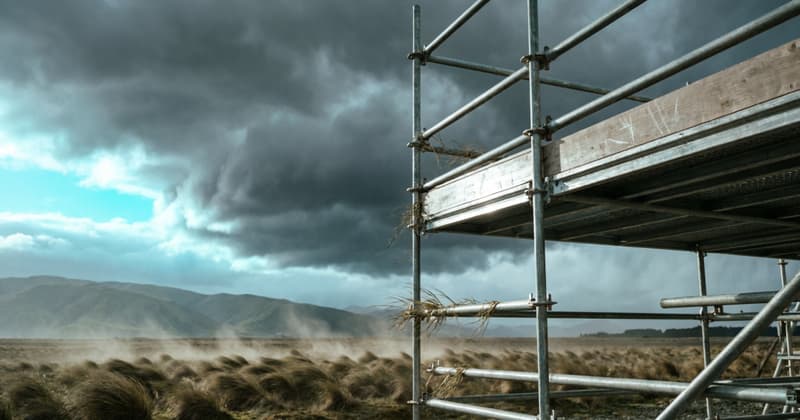

Scaffolding and Weather: Managing Canterbury's Climate
How weather affects scaffolding and what to do about it.
Mana Scaffolding Team
Mana Scaffolding Limited
Anyone who has spent a winter in Canterbury knows the pattern: crisp mornings that give way to biting wind, rain that arrives sideways, and frost that turns every surface into a skating rink. For scaffolding companies working across the region, weather is not an occasional inconvenience — it is a constant variable that shapes every installation, every workday, and every safety decision.
Understanding how Canterbury’s climate interacts with scaffolding — and knowing what to do about it — is essential for anyone managing a construction or renovation project in the region.
Canterbury’s Four Seasons of Scaffolding
Each season brings its own personality to scaffolding work. Summer (December through February) offers the best overall conditions: warm, dry periods with extended daylight. But summer also carries the risk of nor’wester winds that can exceed 100 km/h, turning a productive morning into a shutdown by afternoon.
Autumn (March through May) is the sweet spot. Temperatures are cooling but comfortable, weather tends to settle, and the shorter days are still long enough for full productivity. For scheduling scaffolding work, late February through April is the gold standard.
Winter (June through August) is the most challenging period. Cold, wet ground. Frost on platforms. Daylight that barely stretches past five o’clock. Work slows, conditions degrade, and safety risks climb.
Spring (September through November) brings warming temperatures but also the most variable conditions. Wind events are frequent, and the mix of rain and clearing creates unpredictable site conditions from one day to the next.
Wind: The Dominant Force
Wind is the single most significant weather factor for scaffolding in Canterbury. It generates horizontal forces on the structure, creates uplift on sheeting, turns debris into projectiles, and directly threatens worker safety on exposed platforms.
Canterbury’s notorious nor’wester deserves special attention. These strong, warm winds from the northwest can reach speeds exceeding 100 km/h, often with sudden onset. They create dust and debris that compound the hazard beyond the wind itself. Any scaffolding project in an exposed location should be designed with enhanced bracing, and pre-storm securing protocols should be established before the first gust arrives.
The operational response to wind must be clear and non-negotiable. Wind speed monitoring, evacuation procedures, pre-storm securing protocols, and post-storm inspections are not optional safety measures — they are the difference between a managed risk and an incident.
Rain: The Silent Productivity Killer
Rain affects scaffolding in ways that are easy to underestimate. Surfaces become slippery, visibility drops, electrical safety becomes a concern, and materials need protection. The practical decision framework is straightforward: light rain means continue with caution, moderate rain warrants pausing to assess, and heavy rain or electrical storms mean stop work immediately.
After any significant rain, a proper inspection is essential before work resumes. Surface conditions, foundation stability, connection security, and the status of stored materials all need verification. Surfaces must be dried or treated, safety systems verified, and conditions confirmed as acceptable before anyone steps back onto the scaffold.
The cost of waiting out a rain event is always less than the cost of an incident caused by wet conditions.
Temperature: From Frost to Heat Stress
Cold weather brings frost-slicked platforms, reduced worker comfort, and equipment that performs differently. Anti-slip treatments, de-icing protocols, and awareness of how materials handle in low temperatures are all part of the winter scaffolding toolkit.
Hot weather carries its own hazards. Worker heat stress is a genuine risk on exposed scaffolding with no shade. Surfaces become hot enough to cause burns. UV exposure at height is more intense than at ground level. Adequate hydration, scheduled breaks in shade, and appropriate sun protection are essential during Canterbury’s summer months.
Daylight: The Invisible Constraint
Daylight hours directly affect scaffolding productivity. In mid-winter, Christchurch sees roughly nine hours of daylight, with morning starts often delayed by frost. In summer, that stretches to over fifteen hours — but the UV index climbs to levels that demand active protection.
Planning work to maximise daylight while managing temperature extremes is a balancing act. Core work should be scheduled during peak daylight in winter, while summer work benefits from early morning and late afternoon sessions that avoid the worst heat.
Weather Protection: An Investment in Continuity
Not all weather impacts require passive acceptance. Debris netting contains materials, reduces wind effect on the scaffold, and adds a visual safety barrier. Weather sheeting provides rain protection, blocks wind, and moderates temperatures inside the work zone. Temporary roofing delivers full weather protection that enables work to continue regardless of conditions — at additional cost, but often worth it for projects where delays are expensive.
Protection Cost
Weather sheeting, debris netting, and temporary roofing add to the initial scaffolding investment but eliminate the daily cost of weather delays.Delay Cost
Every day your project stands idle due to weather costs labour, extends the hire period for equipment, and pushes your completion date further out.The decision is straightforward: calculate your daily delay cost, compare it to the cost of protection, factor in the probability of weather disruption for your project’s season, and make an informed choice.
A Systematic Response
Weather management on scaffolding requires a system, not reactions. That means monitoring MetService forecasts, checking wind speed indicators, watching rain radar, and tracking temperature extremes. It means having clear decision thresholds for continuing, pausing, or stopping work. And it means every person on site knows the protocols — not just the site manager.
Mana Scaffolding designs every installation with Canterbury’s climate in mind — from wind-rated configurations and anti-slip treatments to weather protection options and clear response protocols. We monitor conditions, communicate proactively, and inspect thoroughly after every significant weather event.
Planning a project in Canterbury? Let's talk through the weather risks and protection options for your specific site.
Get a QuoteNeed Expert Scaffolding?
Get a free consultation for your next project.
Mana Scaffolding Team
Mana Scaffolding Limited
Based in Christchurch, Mana Scaffolding brings international expertise from Canada and the UK to deliver safe, compliant scaffolding solutions across Canterbury. Contact us at 0508 626 272.